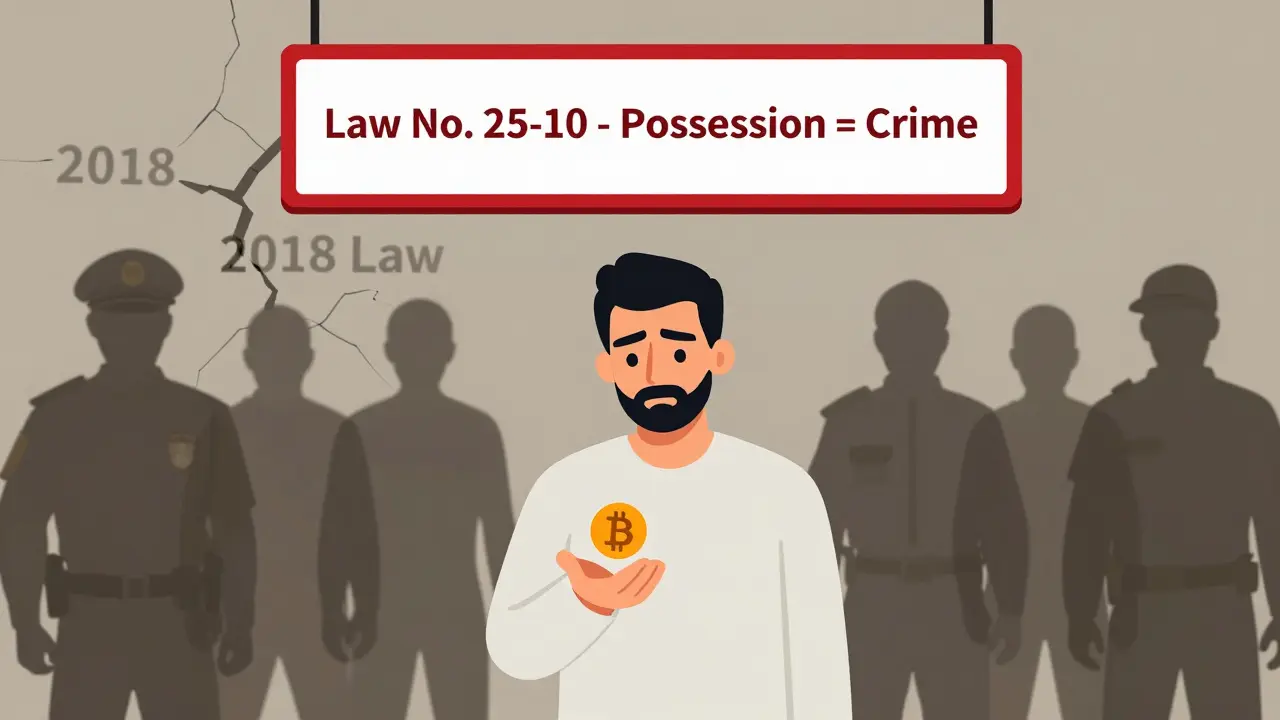
Algeria's 2018 Financial Law began a crypto ban that evolved into a total criminal prohibition by 2025. Now, owning, trading, or even discussing cryptocurrency can lead to jail time and heavy fines.
Algeria Crypto Ban: What’s Really Happening and How People Are Bypassing It
When Algeria banned all cryptocurrency transactions in 2018, the government thought it had shut the door. But Algeria crypto ban, a legal restriction on buying, selling, or exchanging digital currencies through formal financial channels. Also known as crypto prohibition in Algeria, it was meant to protect the national currency and prevent capital flight. Yet, crypto didn’t vanish—it just went underground. The ban targets banks, payment processors, and exchanges, but it doesn’t stop individuals from holding or trading Bitcoin, USDT, or other coins privately.
What the law couldn’t control, technology made easier. Peer-to-peer crypto, a direct way to buy and sell digital assets without intermediaries. Also known as P2P trading, it’s become the lifeline for Algerians who want crypto. Platforms like LocalBitcoins and Paxful let users trade with cash or mobile money, often using WhatsApp or Telegram to arrange deals. USDT, a stablecoin pegged to the U.S. dollar. Also known as Tether, it’s the most popular crypto in Algeria because it avoids wild price swings. People use it to store value, send money abroad, or buy goods from international sellers. Even though the Central Bank of Algeria warns that these trades are illegal, the volume keeps growing.
Why does the ban keep failing? Because it’s not about technology—it’s about need. Many Algerians face high inflation, limited access to foreign currency, and a banking system that’s slow and restrictive. Crypto offers a way out. You won’t find ads for Bitcoin on TV, but you’ll find it in university cafés, private WhatsApp groups, and even local markets where vendors accept USDT for phone credits or imported goods. The government has cracked down on some traders, but enforcement is patchy. Without access to global exchanges like Binance or Coinbase, people rely on decentralized, off-the-radar networks. And those networks are getting smarter.
There’s no official data on how many Algerians use crypto, but estimates from local tech groups suggest hundreds of thousands are active. That’s not a niche group—it’s a growing movement. The Algeria crypto ban isn’t working because it ignores human behavior. People don’t stop using money just because the state says it’s illegal. They adapt. They find ways. They trade in silence.
Below, you’ll find real stories and deep dives into how crypto is surviving in Algeria despite the ban. You’ll see how traders avoid detection, which coins are actually moving, and what happens when the authorities catch up. These aren’t theoretical guides—they’re firsthand accounts from people living this reality every day.