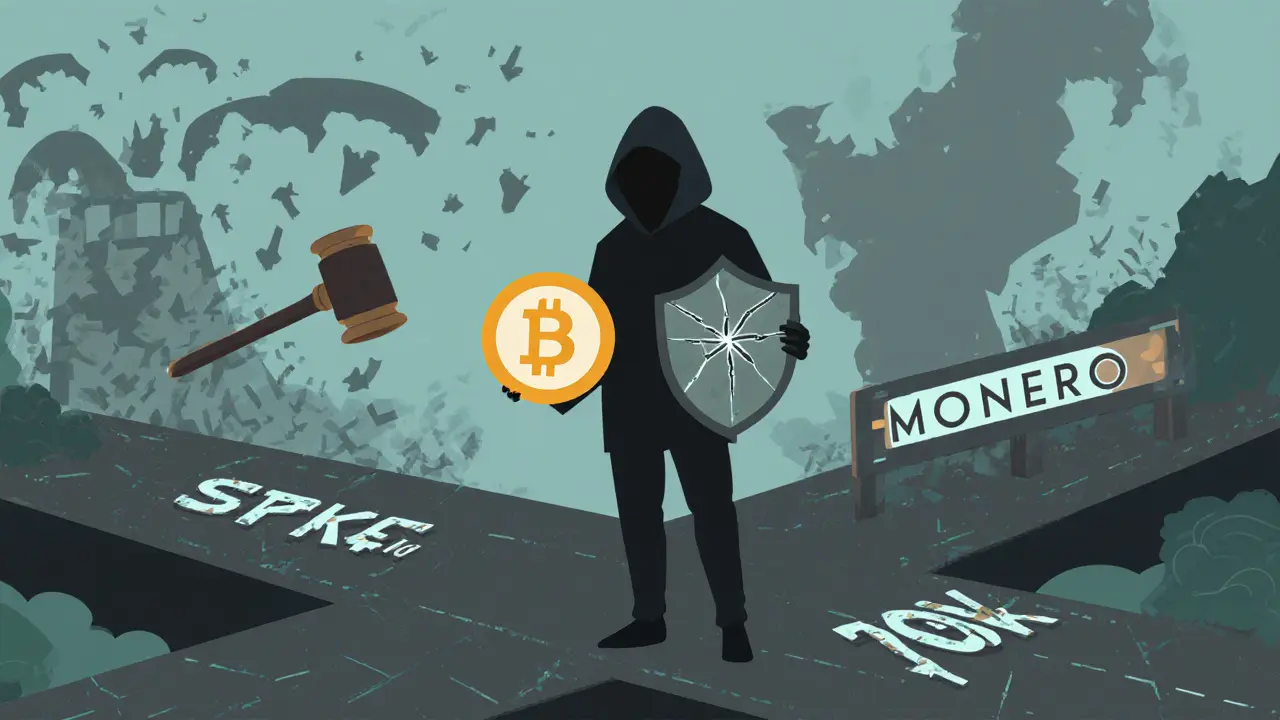
Ghosty Cash (SPKY) is a Solana-based privacy token claiming instant anonymous transactions via Monero's network. But with no known team, no audits, and minimal adoption, it's a high-risk experiment - not a reliable privacy solution.
Anonymous Crypto: What It Really Means and Why It Matters
When people talk about anonymous crypto, digital currency systems designed to obscure user identity and transaction history. Also known as privacy-focused cryptocurrency, it's not just a buzzword—it's a technical requirement for users who want real control over their financial data. But here’s the truth: most coins labeled as "anonymous" aren’t. Some just hide your wallet address. Others don’t hide who you are at all. True anonymous crypto means no one—not exchanges, not governments, not hackers—can trace a transaction back to you. That’s rare. And it’s not about being shady. It’s about basic financial privacy in a world where every purchase, every transfer, every interaction is tracked.
Real anonymous crypto relies on advanced cryptography like zero-knowledge proofs, ring signatures, or confidential transactions. Projects like Monero and Zcash built their entire systems around this. But look at the posts below—most "anonymous" tokens are just meme coins with no privacy tech at all. Take Boys Club (BOYS), a nearly dead meme coin with no real community or utility. It’s not anonymous—it’s invisible because no one cares. Same with Built Different (BUILT), a Solana token with zero trading volume and no team. It’s not private—it’s abandoned. Then there are the fake airdrops: Sonar Holiday, a scam pretending to offer free tokens through a fake Solana event. These aren’t anonymous crypto—they’re phishing traps dressed up to sound like privacy tools. True anonymous crypto doesn’t need a billboard in Times Square to get attention. It doesn’t need to promise free tokens. It just works quietly, securely, and without asking for your ID.
What you’ll find in these posts isn’t a list of privacy coins. It’s a list of what happens when people confuse anonymity with obscurity. You’ll see how airdrops get used to lure victims into fake wallets. You’ll learn how exchanges like Coinrate and 3xcalibur don’t exist—but their scam sites do. You’ll see why KYC verification is the opposite of anonymous crypto, and why platforms like Bitpin and Coincall require it. You’ll understand why the real value isn’t in tokens that claim to be private, but in the tools and habits that keep your crypto safe whether you’re anonymous or not. This isn’t about chasing the next hype coin. It’s about knowing what real privacy looks like—and how to avoid the noise.