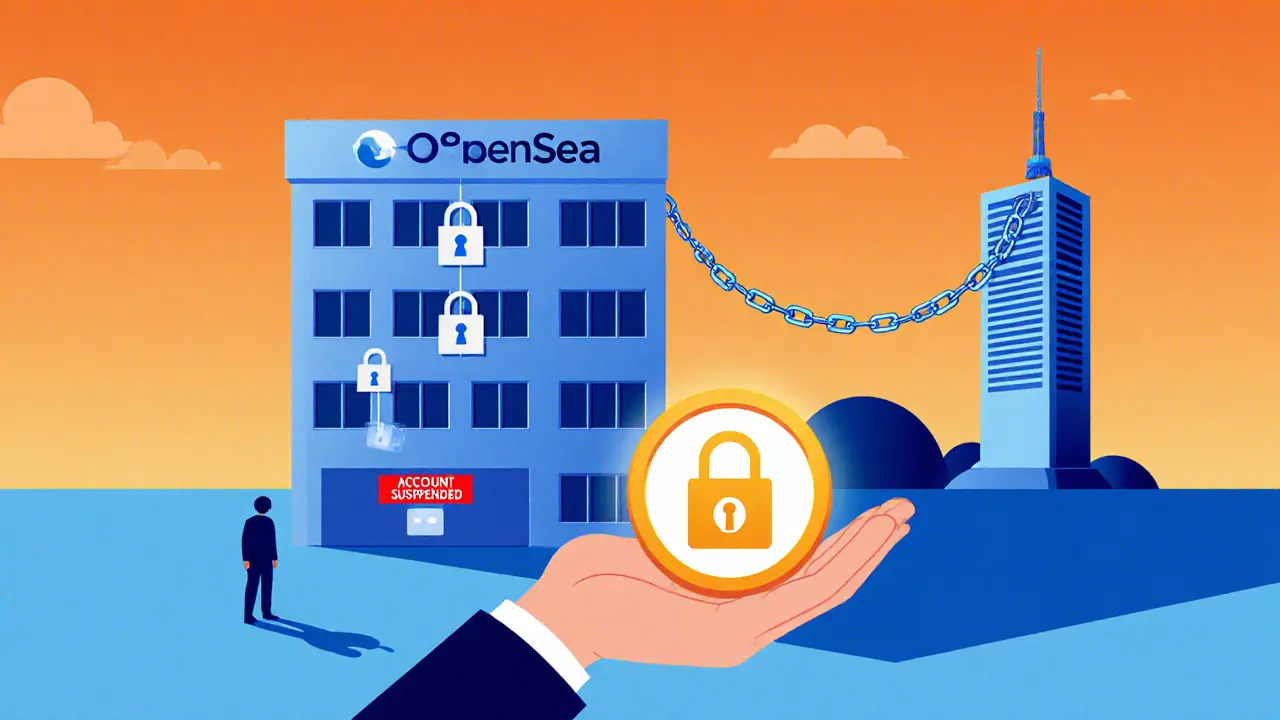
Centralized NFT marketplaces like OpenSea are easy to use but control your assets. Decentralized ones give you real ownership but are harder to navigate. Here's what you need to know before buying your next NFT.
Centralized NFT Marketplace
When you think of buying an NFT, you’re probably thinking of a centralized NFT marketplace, a platform owned and operated by a single company that handles listings, payments, and user accounts. Also known as centralized NFT platforms, these are the go-to spots for most people—whether you’re trading digital art, game items, or collectibles. Unlike decentralized exchanges where you control everything, these sites act like online malls: you sign up, connect your wallet, browse listings, and click buy. It’s simple, fast, and familiar—like Amazon for digital stuff.
But here’s the catch: you’re not really in control. The platform can freeze your account, remove your NFT, or even shut down. OpenSea, for example, handles over 80% of all NFT trades, but it also has the power to delist items it deems inappropriate. That’s not a bug—it’s the design. These platforms offer user-friendly interfaces, customer support, and fiat on-ramps, which is why they still dominate. Meanwhile, decentralized marketplaces like LooksRare or X2Y2 offer more control but lack the ease of use most people need.
When you trade on a centralized NFT marketplace, you’re paying more than just the price of the NFT. There are NFT marketplace fees, platform commissions, gas fees, and sometimes royalty payments. Also known as NFT transaction costs, these add up fast—sometimes over 10% on a single sale. That’s why you’ll see posts here breaking down what you actually pay on OpenSea, Magic Eden, or even smaller platforms. Some users get burned thinking they’re getting a deal, only to realize most of the profit went to fees. And it’s not just about cost. Scams thrive here too. Fake listings, phishing links, and fake support accounts are common. That’s why guides on spotting crypto phishing attempts and avoiding fake airdrops show up so often in this collection.
Most of the posts here aren’t about theory—they’re about real experiences. You’ll find reviews of exchanges like Coincall and Bitpin that let you trade NFTs alongside crypto. You’ll see breakdowns of NFT airdrops tied to esports and gameFi, like GEMS Esports 3.0, where you can earn NFTs just by adding tokens to your watchlist. You’ll also find warnings about dead projects like Boys Club and Built Different, where NFTs lost all value overnight. These aren’t hypotheticals. These are real cases where centralized platforms made it easy to buy—but didn’t protect you when things went south.
So why does any of this matter now? Because centralized NFT marketplaces aren’t going away. Even as DeFi and self-custody tools grow, most new users start here. They need a simple way in. The real question isn’t whether centralized platforms are perfect—it’s whether you understand how they work, what they cost, and where the risks hide. Below, you’ll find clear, no-fluff breakdowns of exactly that: how fees eat your profits, how scams sneak in, and which platforms still deliver real value in 2025.