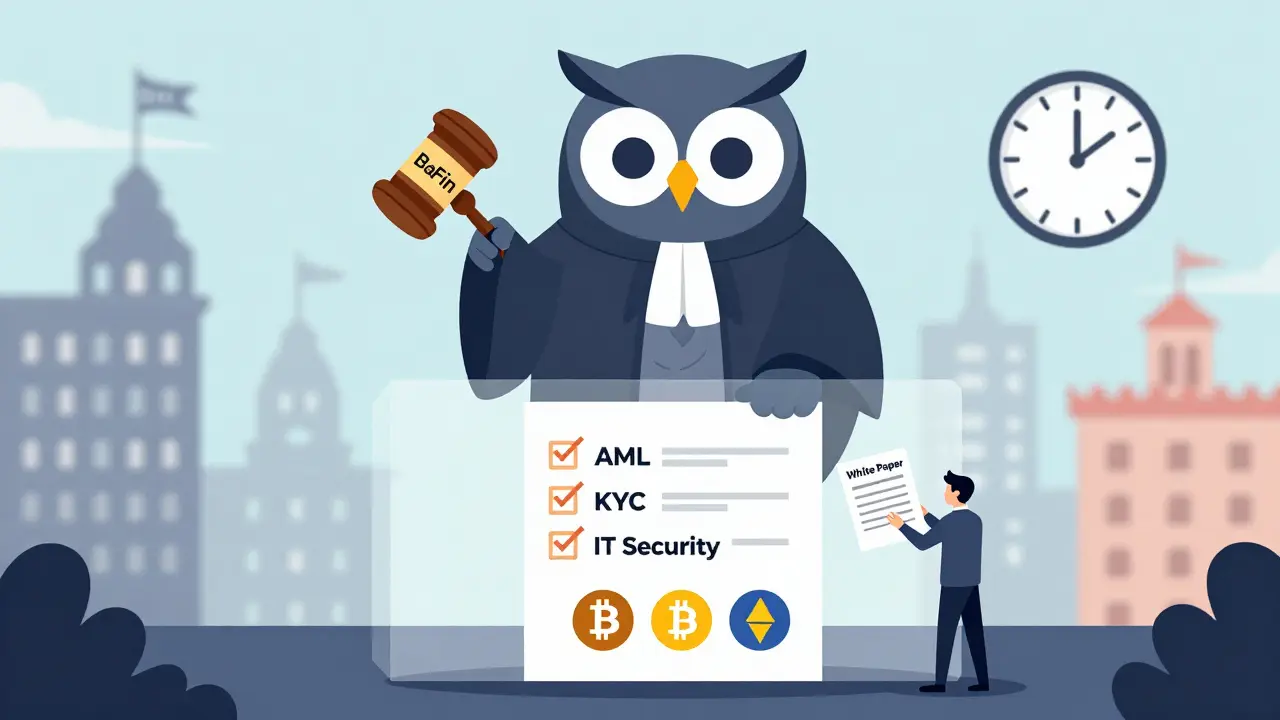
Germany's BaFin enforces strict crypto regulations under MiCAR. Learn what licenses you need, how to comply with AML/KYC rules, and what happens if you ignore the law in 2025.
Crypto Licensing in Germany: What You Need to Know in 2025
When it comes to crypto licensing in Germany, a legal requirement for any business offering crypto services to German residents. Also known as BaFin crypto registration, it's not optional — it's the law. If you're running a crypto exchange, wallet service, or even offering staking as a product, you need approval from Germany's financial regulator, BaFin. This isn't just paperwork; it's about trust, security, and accountability in a market that’s seen its fair share of scams.
Germany doesn't treat crypto like a wild west. Unlike some countries that wait for problems to arise, BaFin acts early. They require companies to prove they have solid anti-money laundering systems, clear ownership structures, and enough capital to cover risks. This means if you're a German user, you're more likely to deal with platforms that are legally accountable. But it also means foreign exchanges like Binance or Bybit can't just operate here without a license — and many have been blocked or forced to shut down their German services. If you're trading on a platform that doesn't show a BaFin license number, you're taking a big risk.
And it’s not just about exchanges. If you're running a crypto-related business — even a simple token sale or a DeFi advisory service — you might need a license too. The rules cover everything from custodial wallets to crypto ATMs. Even if you're just a trader, understanding these rules matters. Why? Because if you're using an unlicensed platform and it gets shut down, your funds could vanish with no legal recourse. Plus, Germany has clear tax rules tied to these licenses: profits from crypto are taxable, and unlicensed platforms make reporting harder — or impossible.
Some people think they can avoid German rules by using foreign exchanges or VPNs. But BaFin is catching up. They track IP addresses, bank transfers, and even social media activity. If you're a German resident, you're still subject to their laws — no matter where you trade. There's no legal loophole. The only safe path is to use a licensed platform or understand the full legal weight of what you're doing.
Germany's approach is strict, but it's also clear. You know where you stand. No vague guidelines. No last-minute rule changes. Just hard rules enforced by a regulator that doesn't play games. That’s why licensed German crypto platforms have higher trust scores and lower fraud rates. It’s not glamorous, but it’s real protection.
Below, you’ll find real-world examples of what happens when companies ignore these rules, how traders adapt, and which platforms actually made it through the licensing process. No hype. No fluff. Just what works — and what gets you in trouble.