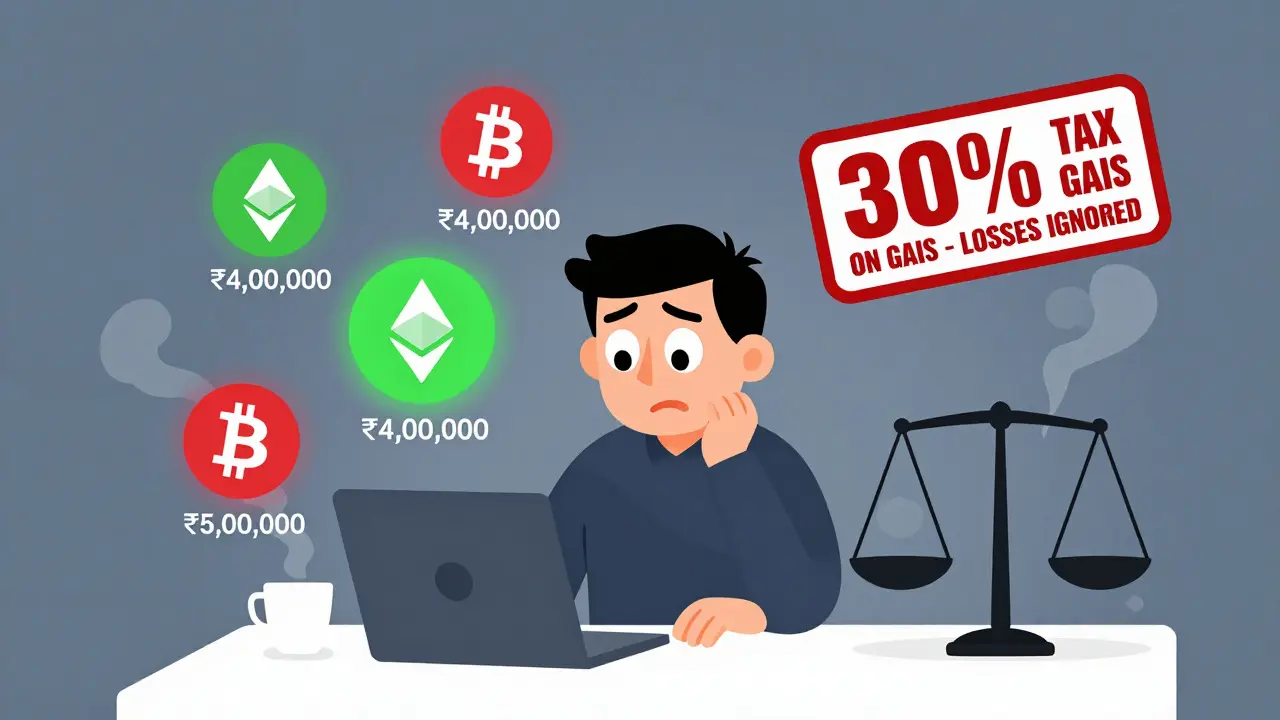
India's no loss offset rule forces crypto traders to pay 30% tax on every profit, even if they lost money overall. With no deductions, no carry-forward, and 1% TDS on every trade, the system punishes losses and discourages participation.
Crypto Tax India: What You Need to Know About Reporting Crypto Gains in 2025
When you buy, sell, or trade cryptocurrency in India, the crypto tax India, the legal requirement to report and pay taxes on digital asset transactions under Indian income law. Also known as digital asset taxation, it applies whether you made a profit or just swapped one coin for another. The rules aren’t vague — they’re strict, and the government is watching.
The crypto capital gains India, the profit you make when selling or trading cryptocurrency for fiat or another crypto. Also known as digital asset profit tax, it’s taxed at 30% with no deductions for losses. That’s right — if you bought Bitcoin at ₹50 lakh and sold it at ₹70 lakh, you pay ₹6 lakh in tax, even if you lost money on Ethereum the same year. There’s no offsetting losses. And if you earn crypto from staking, airdrops, or mining? That’s treated as crypto income tax India, taxable income at your slab rate when you receive the asset. Also known as crypto earnings tax, it’s not deferred until you sell. You owe tax the moment the tokens hit your wallet.
Reporting is mandatory. The Income Tax Department matches data from exchanges like WazirX, CoinDCX, and ZebPay. Even if you used P2P platforms or DeFi protocols, you’re still required to declare. No KYC? Doesn’t matter. The government gets transaction data from blockchain analytics firms and bank reports. Failing to report isn’t just risky — it’s a legal violation with penalties up to 200% of the tax due.
What about gifts? If someone sends you crypto, you pay tax on its market value at the time of receipt. If you send crypto as a gift to someone else, you don’t owe tax — but the receiver does. This isn’t a loophole — it’s a trap waiting for the unaware.
You don’t need a CPA to file, but you do need records. Track every trade, every swap, every staking reward. Use free tools like Koinly or CoinTracker — they auto-import from wallets and exchanges. Don’t guess. Don’t rely on exchange summaries. Your tax liability is based on your actual activity, not what your app says.
And yes — even if you’re not a trader, you’re still affected. If you got crypto as payment for freelance work, paid for goods with Bitcoin, or earned tokens from a play-to-earn game, you owe tax. The law doesn’t care if you thought it was ‘free money.’ It cares about value received.
There’s no amnesty. No grace period. The rules have been in place since 2022, and enforcement is getting sharper every year. In 2025, the government is expanding its data-sharing agreements with foreign exchanges and blockchain explorers. If you held crypto on Binance or Bybit and transferred it to an Indian wallet, they know.
What you’ll find below isn’t theory. It’s real cases, real mistakes, and real fixes from people who’ve been through it. We’ve pulled together guides on how to calculate your tax, how to avoid common filing errors, and what happens when you get an income tax notice. No fluff. No fearmongering. Just what you need to stay compliant — and keep your money.
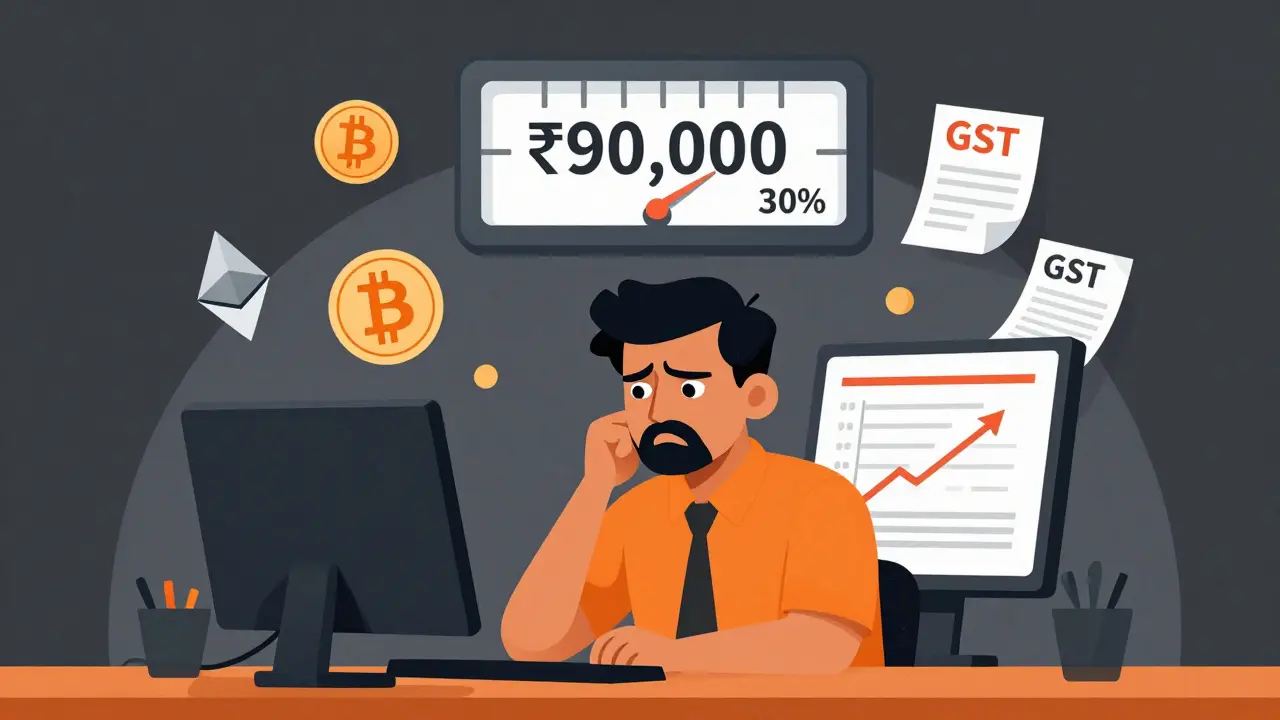
India enforces crypto taxes at 30% with 1% TDS and 18% GST on platform fees. Penalties include interest, fines up to 50% of unpaid tax, and prosecution. Reporting is mandatory, and offshore trading doesn't exempt you.