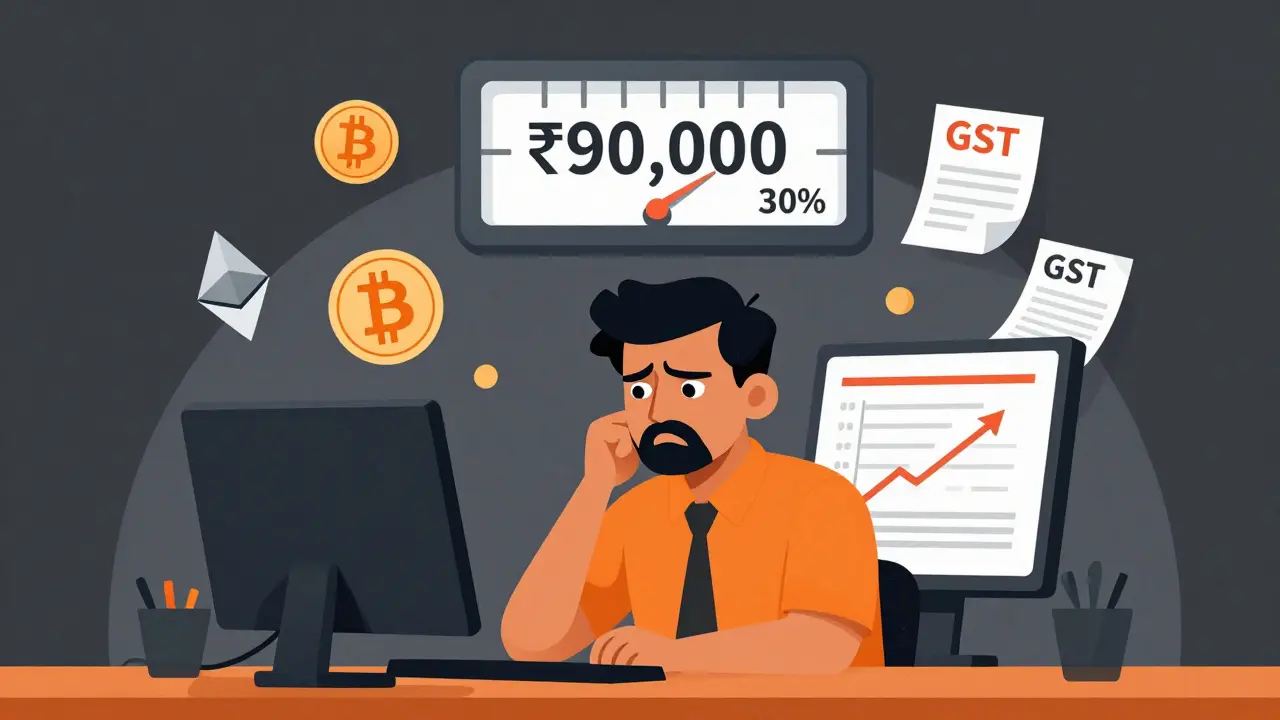
India enforces crypto taxes at 30% with 1% TDS and 18% GST on platform fees. Penalties include interest, fines up to 50% of unpaid tax, and prosecution. Reporting is mandatory, and offshore trading doesn't exempt you.
Crypto TDS India: What You Need to Know in 2025
When you trade crypto in India, TDS on crypto, a tax deducted at source applied to crypto transactions under India’s 2022 Finance Act. Also known as 30% tax + 1% TDS, it’s not just a fee—it’s a legal requirement that catches even small trades. If you bought Bitcoin on WazirX or sold Ethereum on CoinDCX last month, TDS was likely taken automatically. No invoice. No warning. Just gone.
This isn’t about speculation. It’s about compliance. The Indian government treats crypto as a taxable asset class, not currency. Every sale, swap, or transfer triggers a 1% TDS deduction by the exchange. That’s on top of the 30% flat tax on profits. No deductions. No offsets. Even if you break even, TDS still applies. And unlike stocks, there’s no indexation benefit. You pay on gross gains, not adjusted gains. The rules are strict, and enforcement is getting tighter. Exchanges like ZebPay and CoinSwitch Kuber now block withdrawals if your KYC or TDS records don’t match.
But TDS isn’t the whole story. What about buying crypto with INR? That’s not taxed—yet. What if you hold crypto for five years? Still taxed at 30%. What if you send crypto to a friend? That’s a taxable event too. And if you use a foreign exchange like Binance? The Indian tax department can still track it through bank records, UPI trails, and Aadhaar-linked transactions. The system isn’t perfect—but it’s watching.
There’s a gap between what people think and what the law says. Many assume TDS is a final tax. It’s not. You still need to file ITR-2 and report all crypto gains. Many miss this. Others panic and overpay. The truth? TDS is a prepayment, not a settlement. You might get a refund if your total income puts you in a lower bracket. But you won’t know until you file.
India’s crypto scene is stuck between innovation and regulation. Exchanges are licensed. Wallets are growing. But the rules keep shifting. The 2025 budget didn’t change TDS—but it did expand reporting requirements. Now, exchanges must report all users who traded over ₹10,000 in a year. That’s not a threshold for tax—it’s a threshold for scrutiny.
Below, you’ll find real cases, real exchanges, and real mistakes made by Indian traders. You’ll see how TDS plays out on Binance P2P, why some wallets trigger alerts, and how people are still trying to avoid it—sometimes legally, sometimes dangerously. This isn’t theory. It’s what’s happening right now, on the ground, in India’s crypto market.