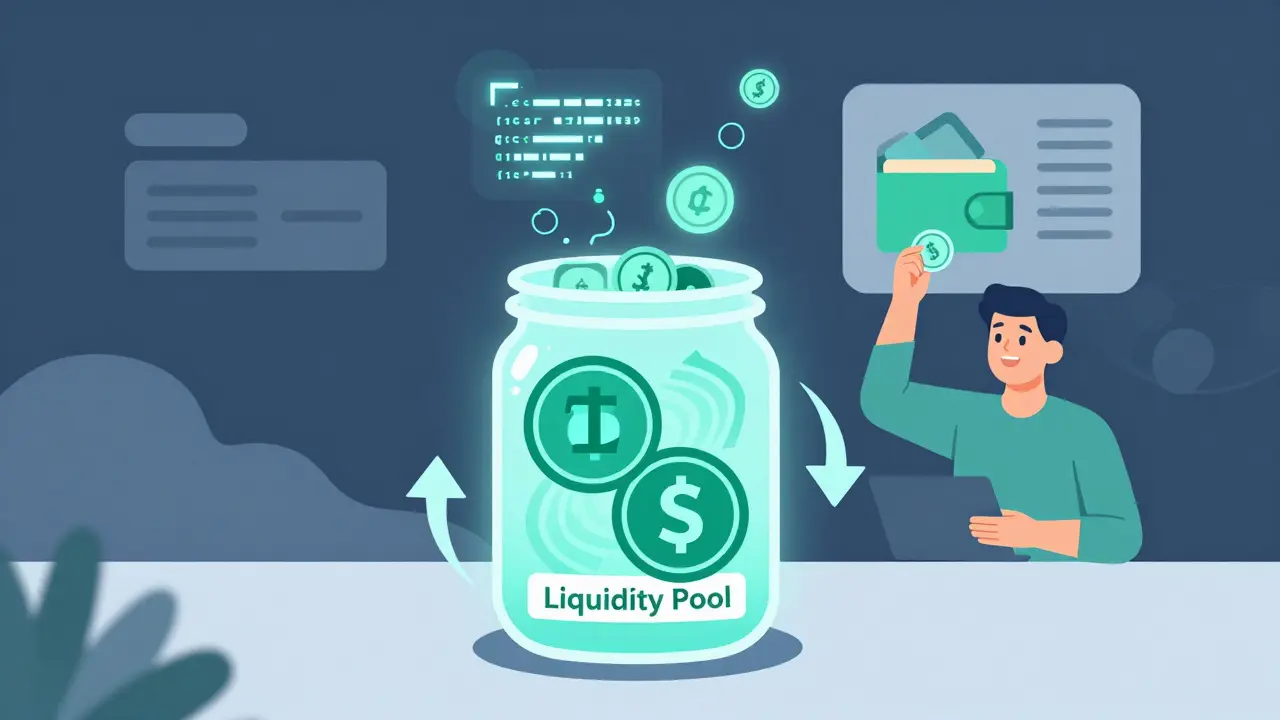
Liquidity pools are the backbone of DeFi, enabling instant crypto trading without intermediaries. Learn how they work, the risks like impermanent loss, and how to safely earn fees by providing liquidity.
Decentralized Finance: How DeFi Is Changing Crypto Without Banks
When you hear decentralized finance, a system that lets people lend, borrow, and trade crypto without banks or middlemen. Also known as DeFi, it’s not a future idea—it’s happening right now on blockchains like Ethereum and Arbitrum, with real money moving through smart contracts instead of bank branches. Unlike traditional finance, DeFi doesn’t need you to prove who you are. No credit checks. No paperwork. Just code that runs automatically when conditions are met. That’s why people use it to earn interest on crypto they hold, trade tokens without a central exchange, or even take out loans using their Bitcoin as collateral.
But DeFi isn’t just one thing. It’s built on layers. liquid staking, a way to earn rewards from staking Ethereum without locking up your coins lets you stake ETH and get rETH in return—something you can use in other DeFi apps. Then there’s cross-chain bridges, tools that move assets between blockchains, like sending Bitcoin to Ethereum to use in DeFi. These bridges are powerful, but they’ve also been hacked for over $2 billion. That’s why people are switching to trust-minimized ones that don’t rely on a single team to keep things safe.
DeFi also means new kinds of exchanges. Platforms like SpookySwap and GMX let you trade directly from your wallet, with low fees and high leverage. But not all DeFi projects are real. Some are just tokens with no product, no team, and no future—like the ones we’ve seen in the last year. That’s why knowing the difference between a working protocol and a pump-and-dump is critical. The same goes for airdrops and new platforms. Many claim to be part of DeFi, but if there’s no transparency, no history, and no real users, it’s probably not DeFi—it’s a gamble.
What you’ll find below are real stories about how DeFi works in practice: which platforms actually deliver, which ones are scams, and how people are using it even in countries where crypto is banned. You’ll see how DeFi tools like MultiSig wallets protect large holdings, how tax rules are catching up, and why some DeFi tokens vanish overnight. This isn’t theory. It’s what’s happening on the ground in 2025—warts and all.