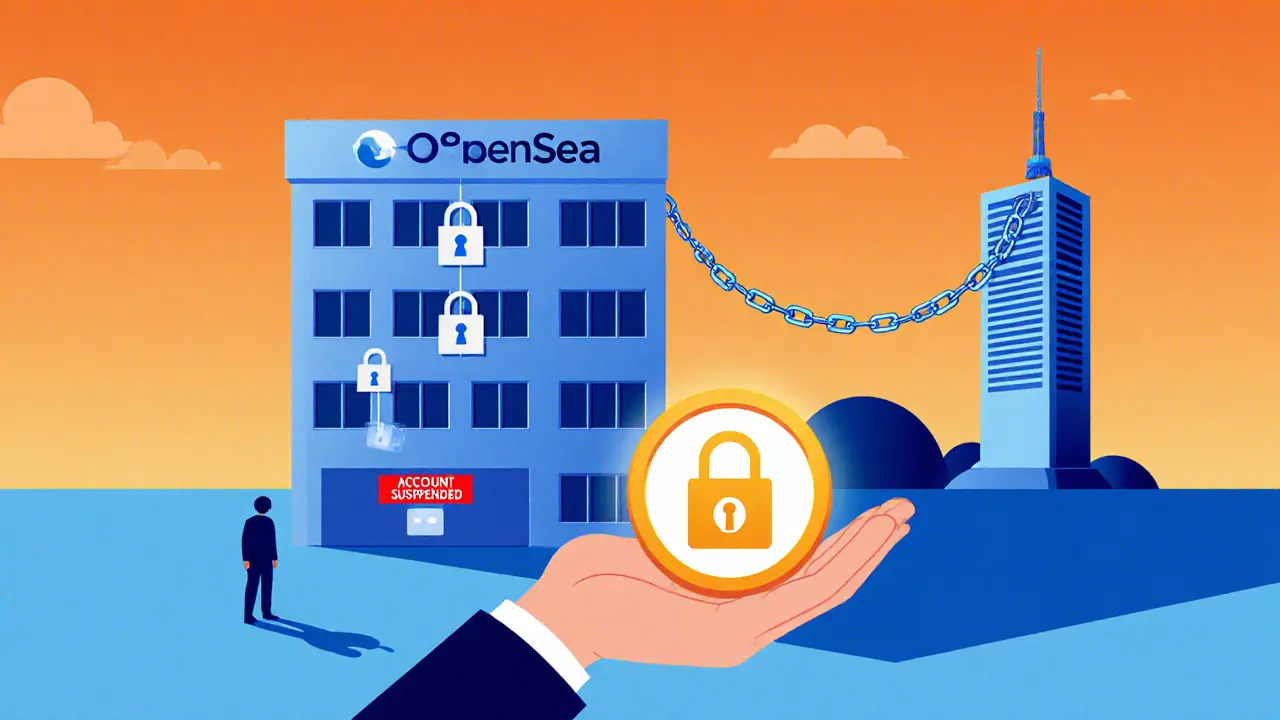
Centralized NFT marketplaces like OpenSea are easy to use but control your assets. Decentralized ones give you real ownership but are harder to navigate. Here's what you need to know before buying your next NFT.
Decentralized NFT Marketplace
When you trade an NFT on a decentralized NFT marketplace, a blockchain-based platform where buyers and sellers connect directly without a central company controlling the process. Also known as a peer-to-peer NFT platform, it lets you own your assets fully—no gatekeepers, no account freezes, no sudden fee hikes. Unlike centralized sites like OpenSea or Rarible, which still hold some control over listings and payouts, a true decentralized NFT marketplace runs on smart contracts. That means the rules are coded into the blockchain, not decided by a CEO or a support team.
These platforms rely on blockchain NFT, digital assets stored directly on a public ledger like Ethereum, Solana, or Polygon, so ownership is verifiable and permanent. They also use crypto NFT platform, a wallet-connected system where users sign transactions with their private keys instead of logging in with emails or passwords. This removes third-party risk—if the platform disappears, your NFTs stay safe in your wallet. That’s why tools like MetaMask and Phantom aren’t just helpful—they’re required.
But not all decentralized marketplaces are built the same. Some focus on speed and low fees, like those on Solana, while others prioritize security and royalty enforcement on Ethereum. You’ll find platforms that let artists set their own resale percentages, others that let you bid in stablecoins instead of volatile tokens, and some that even let you rent NFTs instead of buying them outright. The best ones give you control over every step: listing, pricing, accepting offers, and withdrawing funds—without asking for permission.
What you won’t find in a true decentralized NFT marketplace? Customer service bots that say "check your email" when your NFT gets stuck. No hidden fees buried in fine print. No sudden bans because your account looked "suspicious." Just code, wallets, and a direct connection between you and the buyer. That’s why users who’ve been burned by centralized platforms keep coming back—to the ones that don’t play games.
Below, you’ll find real breakdowns of platforms that actually work, scams that pretend to be decentralized, and guides on how to trade safely without losing your assets. Whether you’re trying to sell your first NFT or looking for the lowest fee exchange for your collection, the posts here cut through the noise and show you what’s real.