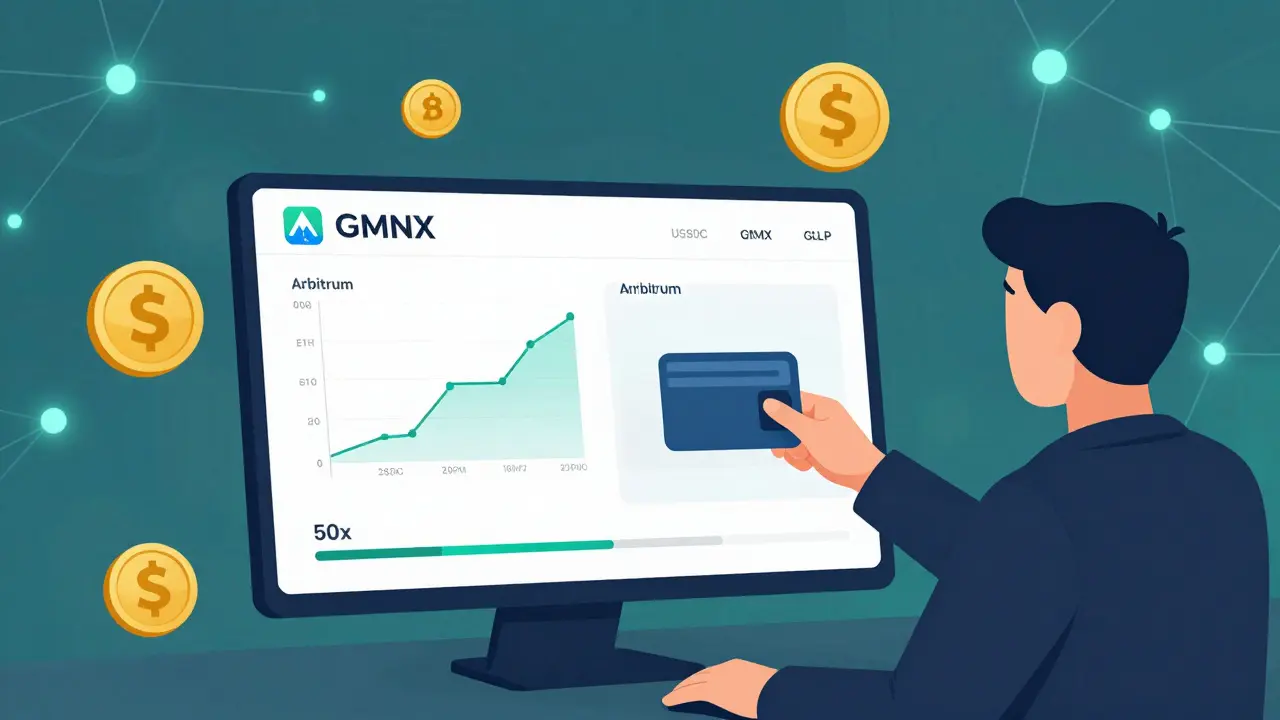
GMX on Arbitrum is a top decentralized exchange for leveraged crypto trading with up to 100x leverage, no KYC, and real rewards for stakers. See how it compares to dYdX, Hyperliquid, and Binance.
GMX GLP: What It Is, How It Works, and Why It Matters in DeFi
When you trade on GMX GLP, the native liquidity pool token of the GMX decentralized exchange that aggregates assets to enable low-slippage trading. It's not a coin you hold for speculation—it's the engine behind one of the most efficient perpetuals platforms in DeFi. Think of GLP as a basket of crypto assets—like ETH, BTC, AVAX, and USDC—that traders use to open leveraged positions. Every time someone opens a trade on GMX, the platform uses GLP to match their position. In return, people who provide those assets to GLP earn fees from every trade, plus rewards in GMX tokens. It’s a simple loop: traders need liquidity, liquidity providers earn money, and everyone wins—unless the market crashes hard.
GMX GLP isn’t just another yield farm. It’s built for real trading volume, not just hype. Unlike most DeFi protocols that rely on unstable token incentives, GMX’s model ties rewards directly to actual usage. The more trading happens, the more GLP holders get paid. This is why you’ll see GLP tied to platforms like Arbitrum and Avalanche—it’s not trying to be everything. It’s focused on one thing: making perpetual trading fast, cheap, and reliable. And it works. GMX consistently ranks among the top DEXs by volume, even when the rest of DeFi is quiet.
Related to GLP is the GMX token, the governance and reward token used to claim fees and vote on protocol changes. While GLP earns you trading fees, GMX gives you voting power and extra rewards. Then there’s the decentralized exchange, a non-custodial platform where users trade directly from their wallets without intermediaries itself—GMX doesn’t hold your funds. You connect your wallet, trade against the GLP pool, and walk away with your assets intact. No KYC. No middlemen. Just code and capital.
But it’s not perfect. GLP is exposed to impermanent loss if the prices of its underlying assets swing wildly. If BTC drops 30% and ETH drops 40%, your GLP position shrinks—even if you didn’t trade a single coin. That’s why most serious GLP providers monitor asset weights and sometimes rebalance manually. And while GMX is one of the most trusted DEXs, it’s still DeFi. Smart contracts can have bugs. Market conditions can turn fast. You’re not banking with a bank—you’re banking with code.
What you’ll find below are real, no-fluff reviews and breakdowns of platforms and tokens that connect to GMX GLP. You’ll see how GLP compares to other liquidity pools, what happens when trading volume spikes, and which wallets work best with GMX. There are also posts on how to avoid scams pretending to be GMX airdrops, how fees stack up against centralized exchanges, and whether GLP is still worth locking up in 2025. This isn’t theory. It’s what people are actually doing—and what’s working.