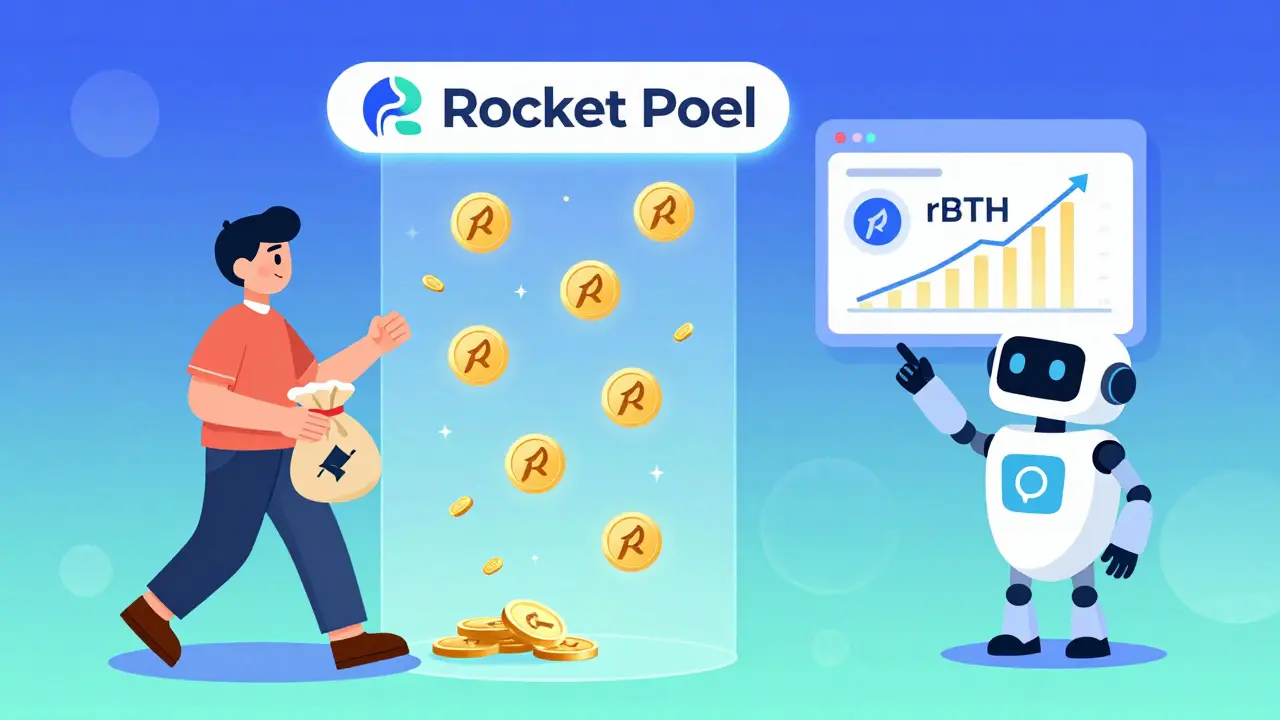
rETH is Rocket Pool's liquid staking token that lets you earn Ethereum staking rewards with as little as 0.01 ETH. Unlike traditional staking, rETH grows in value over time and works seamlessly in DeFi.
Liquid Staking Explained: How It Works and Why It Matters in Crypto
When you stake crypto like Ethereum, you lock it up to help secure the network and earn rewards. But what if you could earn those rewards and still use your tokens to trade, lend, or invest elsewhere? That’s where liquid staking, a system that lets you stake crypto while keeping it usable in DeFi. Also known as liquid staking tokens, it’s turning traditional staking on its head.
Liquid staking works by letting you deposit your crypto—like ETH—into a protocol. In return, you get a token that represents your staked amount, like stETH or rETH. These tokens can be traded, used as collateral, or moved into liquidity pools. Meanwhile, your original crypto keeps earning staking rewards behind the scenes. It’s like getting a receipt that acts like cash. This solves the biggest problem with regular staking: losing access to your funds. You’re no longer stuck waiting for a withdrawal queue or missing out on other opportunities.
It’s not magic, though. There are risks. If the protocol gets hacked or the token loses its peg to the original asset, you could lose value. Some liquid staking tokens have seen dips during market stress. But for many, the trade-off is worth it. Platforms like Lido, Rocket Pool, and Coinbase Staking offer liquid staking on Ethereum, and similar systems are popping up on Solana, Polygon, and others. You’ll also see these tokens show up in DeFi, a system of open financial apps that run on blockchains without banks protocols—lending, borrowing, or providing liquidity—because they’re treated like regular assets.
What you’ll find in the posts below isn’t just theory. You’ll see real examples of how people use liquid staking tokens to boost returns, what went wrong in some cases, and how it connects to other crypto tools like liquidity pools and multi-sig wallets. You’ll also spot the overlap with airdrops, exchange reviews, and tax rules—because once you start earning rewards, taxes and security matter just as much as the yield. This isn’t just about earning more. It’s about keeping control, staying flexible, and not getting caught off guard.