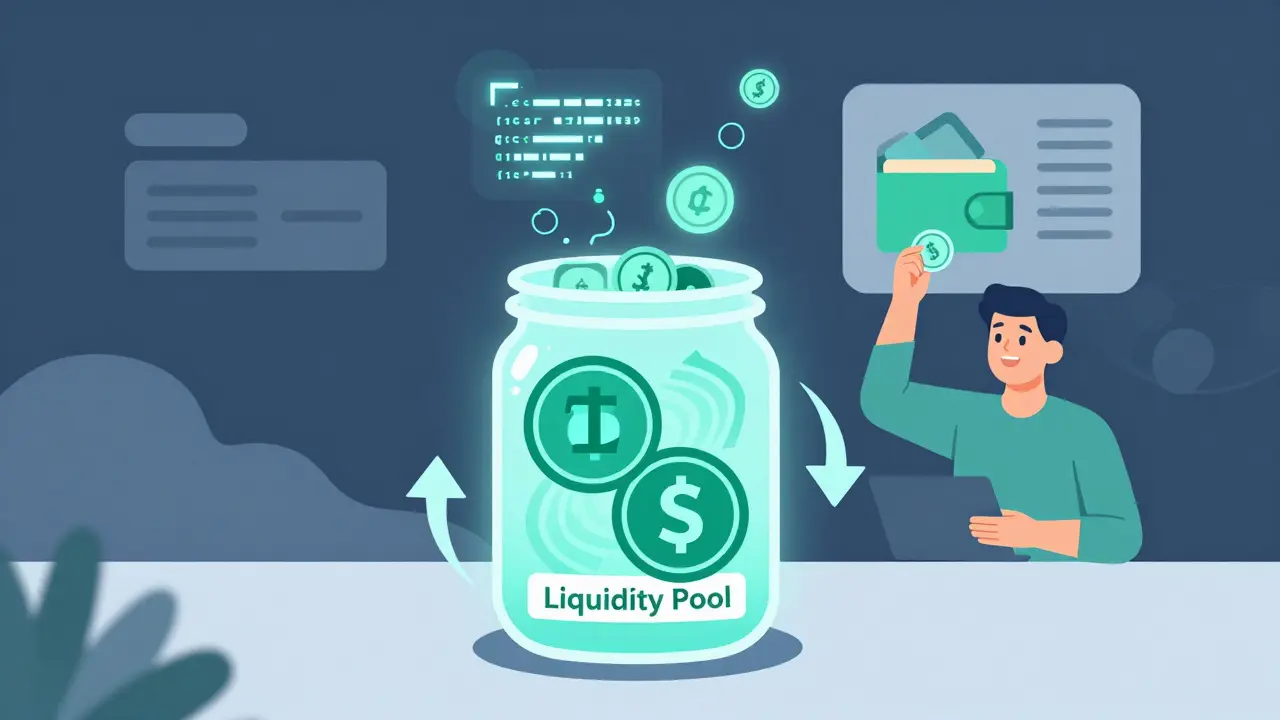
Liquidity pools are the backbone of DeFi, enabling instant crypto trading without intermediaries. Learn how they work, the risks like impermanent loss, and how to safely earn fees by providing liquidity.
Liquidity Pools Explained: How They Power DeFi and Why They Matter
When you trade crypto on a decentralized exchange like Uniswap or SpookySwap, you’re not buying from another person—you’re trading against a liquidity pool, a smart contract holding paired crypto assets that enable instant trades without order books. Also known as automated market maker (AMM) pools, these are the engine behind most DeFi trading today. Unlike traditional exchanges that match buyers and sellers, liquidity pools use math to set prices automatically. For every token you swap, the pool adjusts its balance, and the price shifts slightly. It’s simple, fast, and completely trustless—but it’s not magic.
Liquidity pools require people to deposit crypto, like ETH and USDT, to keep the system running. These people are called liquidity providers, and they earn fees from every trade that uses their pool. But here’s the catch: if the price of one token in the pair swings wildly, you can lose money. That’s called impermanent loss, and it’s why some providers walk away with less than they put in. You see this in real life with tokens like WAG or CYT—low-volume pools get crushed when traders dump them. Meanwhile, high-volume pools like those on GMX or SpookySwap stay stable because tons of trades keep fees flowing and prices steady.
Not all liquidity pools are built the same. Some, like the ones on 4swap, skip pools entirely and use atomic swaps—direct peer-to-peer trades with no middleman. That’s safer but slower and harder to use. Others, like GMX’s GLP pool, bundle dozens of tokens together so you can earn from multiple markets at once. And then there are the fake ones—pools created by scam projects with no real users, just bots pretending to trade. Spotting the difference matters. You can’t just look at the APY; you need to check volume, team history, and whether the token even has a working product.
Behind every big DeFi win or loss is a liquidity pool. They’re not just technical tools—they’re economic systems shaped by human behavior. When a token like LON gets traction, its pool grows. When a project like BitSong dies, its pool dries up. And when a new platform like WagyuSwap launches with an airdrop, everyone rushes in—until the hype fades and the prices crash. This isn’t theory. It’s what’s happening right now, across dozens of chains and dozens of tokens.
What follows is a collection of real-world stories about liquidity pools—how they work, how they fail, and how people make or lose money using them. You’ll see what happens when a DEX like Hpdex has no volume, why SpookySwap dominates Fantom, and why some pools are worth your capital while others are landmines. No fluff. Just what you need to know before you add your tokens to a pool.