MultiSig wallets require multiple signatures to move crypto, making them far safer than single-key wallets. Learn how Safe Wallet, Blue Wallet, and others protect large holdings against theft, loss, and internal fraud.
Multisig Crypto Wallet: How It Keeps Your Crypto Safe and Who Uses It
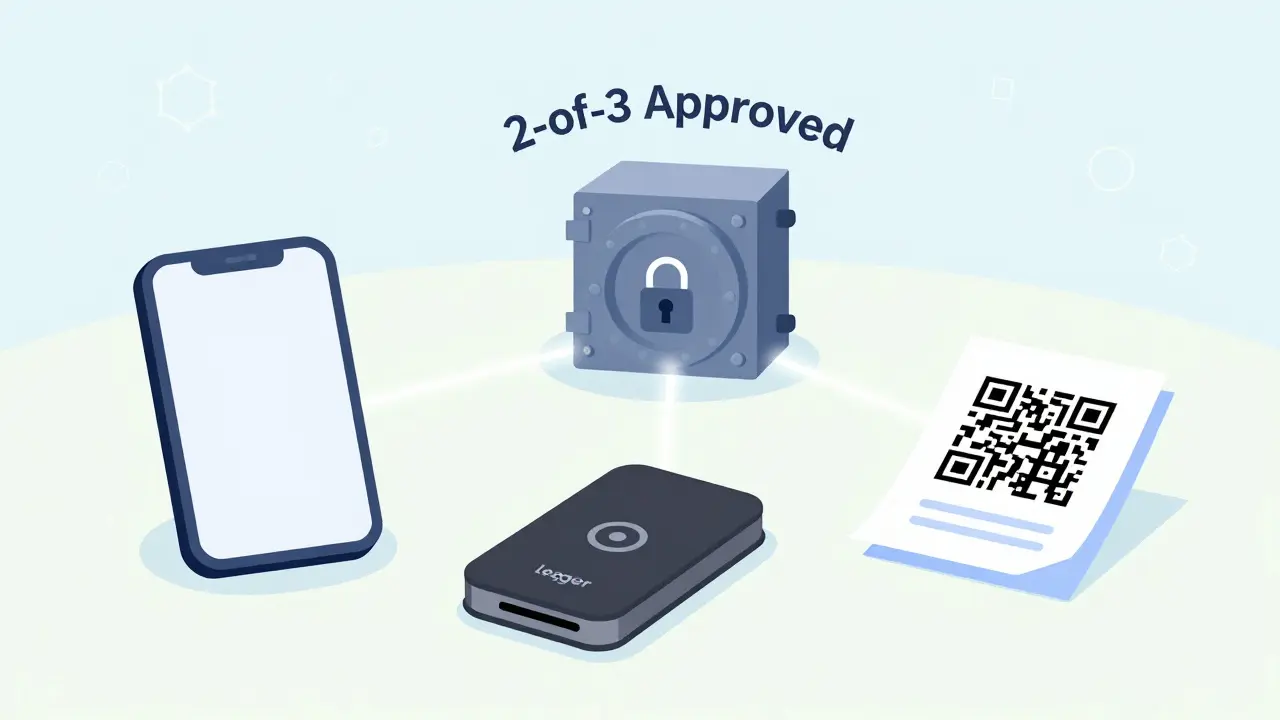
When you hold crypto, you’re holding the keys to your money. But what if one key gets lost, stolen, or hacked? That’s where a multisig crypto wallet, a digital wallet that requires two or more private keys to authorize a transaction. Also known as multi-signature wallet, it acts like a vault with multiple locks—you need at least two people to open it. Unlike regular wallets that rely on a single private key, multisig splits control. This isn’t just for tech fans—it’s used by exchanges, family trusts, crypto funds, and even small businesses to stop single points of failure.
Think of it like a bank safe with two keys: one held by you, one by your partner. Neither can open it alone. In crypto, this means if your phone gets stolen, or your seed phrase is leaked, your funds stay locked until another authorized key signs off. It’s why companies like Coinbase and Ledger use multisig for cold storage. It’s also why DAOs and crypto teams rely on it—no one person can drain the treasury. And if you’re holding a large amount of Bitcoin or Ethereum, multisig is the closest thing to insurance you’ll ever get.
It’s not perfect. Setting up a multisig wallet takes more work than a regular one. You need to coordinate with others, choose the right number of keys (2-of-3 is common), and store backup keys securely—on paper, metal, or offline devices. But the trade-off is worth it. A single compromised key won’t cost you everything. That’s why the most secure crypto holders, the ones who’ve seen hacks up close, don’t just use multisig—they insist on it. Below, you’ll find real-world examples of how multisig works in practice, from protecting team funds to stopping phishing attacks before they happen.