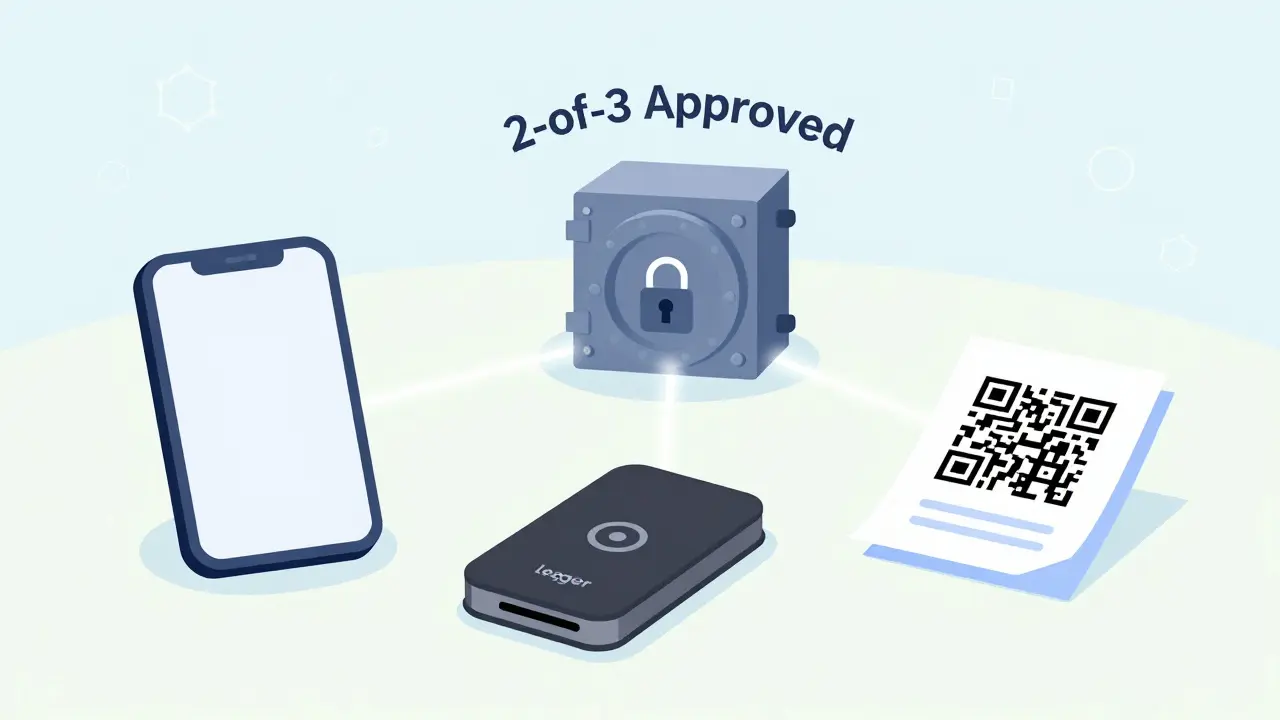
MultiSig wallets require multiple signatures to move crypto, making them far safer than single-key wallets. Learn how Safe Wallet, Blue Wallet, and others protect large holdings against theft, loss, and internal fraud.
MultiSig Wallet: How Shared Crypto Keys Keep Your Assets Safe
When you hold crypto, you’re not just storing value—you’re holding the key to it. That’s where a MultiSig wallet, a type of cryptocurrency wallet that requires multiple private keys to authorize a transaction. Also known as multisignature wallet, it’s designed so no single person can move funds alone. Think of it like a bank vault that needs two or three people to turn different keys at the same time. If one key gets lost, stolen, or hacked, your money stays locked. That’s the whole point.
MultiSig wallets are used by individuals who want extra security, but they’re also the backbone of crypto businesses, DAOs, and family wealth setups. You might give one key to yourself, another to your spouse, and a third to a trusted friend. Or, if you’re running a company wallet, you could require three out of five team members to sign off on any transfer. It’s not just about trust—it’s about reducing risk. A single private key is a single point of failure. MultiSig turns that into a chain of failures, which is way harder to break.
It’s not magic. You still need to store your keys safely—preferably offline on hardware devices like Ledger or Trezor. But even then, MultiSig adds a layer that standard wallets don’t have. If someone steals your phone and gets your seed phrase, they still can’t spend anything unless they also get the other keys. That’s why so many high-value holders, from crypto founders to institutional investors, use it. And if you’ve ever worried about losing access to your funds because you forgot a password or got scammed, MultiSig is the closest thing to insurance you’ll find in crypto.
Related tools like hardware wallets and cold storage help, but they’re only as strong as the single key they protect. MultiSig changes the game by distributing control. It’s why platforms like Coinbase Custody and Gnosis Safe rely on it. It’s also why you’ll see MultiSig used in the most secure DeFi setups, like liquidity pool management or treasury wallets for DAOs. Even if a project gets hacked, a MultiSig wallet can freeze funds before they’re drained.
What you’ll find in the posts below isn’t theory—it’s real-world use. From how traders in China use MultiSig to bypass exchange restrictions, to how families set up shared wallets for inheritance, to how scams target people who think they’re safe with just one key. You’ll see what works, what doesn’t, and why some people still lose money even with MultiSig—because the human side is just as important as the tech. This isn’t about being fancy. It’s about not getting robbed.