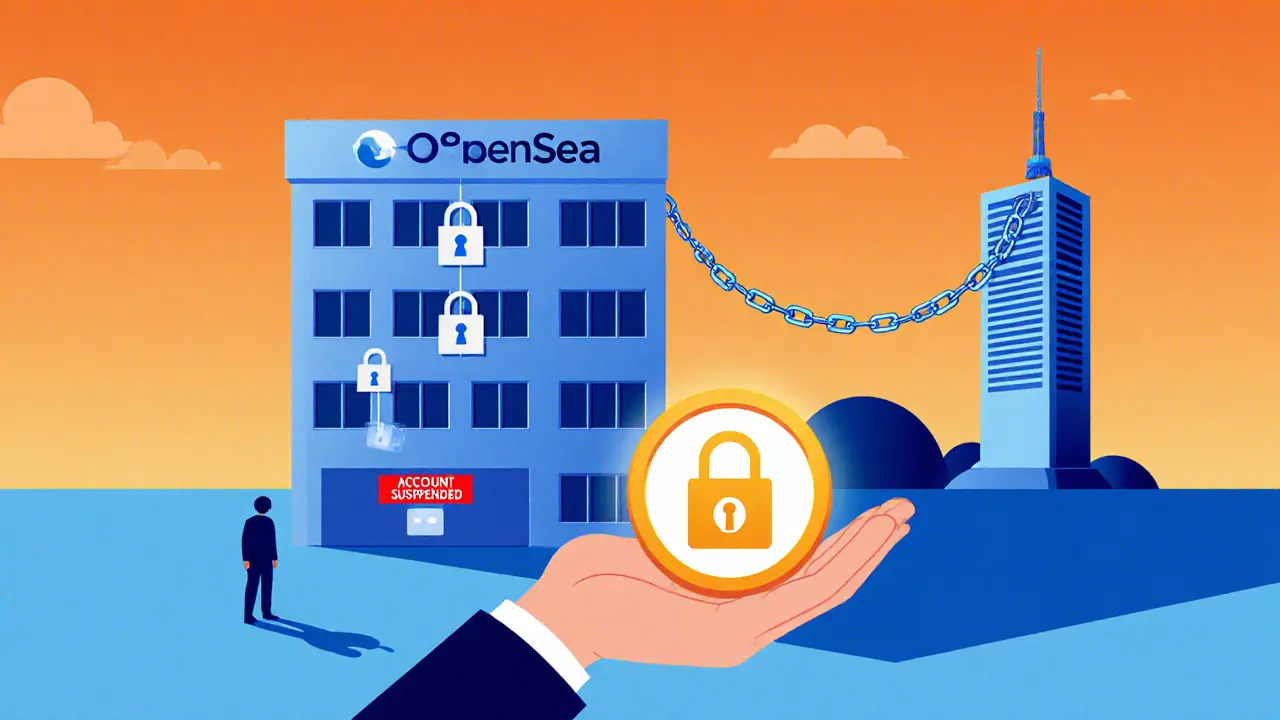
Centralized NFT marketplaces like OpenSea are easy to use but control your assets. Decentralized ones give you real ownership but are harder to navigate. Here's what you need to know before buying your next NFT.
OpenSea: What It Is, How It Works, and What You Really Pay to Trade NFTs
When you think of buying or selling an NFT, OpenSea, the largest and most well-known NFT marketplace built on Ethereum and Polygon. Also known as the go-to platform for digital collectibles, it lets you trade everything from pixel art to virtual land—no code needed. But OpenSea isn’t just a storefront. It’s a gateway to a whole ecosystem of wallets, gas fees, royalties, and hidden costs that most new users never see until it’s too late.
Behind OpenSea are other key players you need to understand. NFT marketplace fees, the commissions and blockchain costs charged every time you list or buy an NFT can eat up 2.5% to 10% of your sale. Then there’s Polygon NFT platform costs, a cheaper alternative to Ethereum that slashes gas fees by over 90%—and many creators now use it to avoid OpenSea’s Ethereum charges. And don’t forget NFT trading, the act of buying and selling digital assets that often involves smart contract interactions, not just clicking a button. These aren’t just buzzwords—they’re real costs and mechanics that determine whether you profit or lose money.
OpenSea doesn’t control the NFTs you list. It just hosts them. That means if a project changes its royalty rules, or a wallet gets hacked, or a collection gets delisted, OpenSea won’t step in. You’re on your own. That’s why so many traders now compare platforms like Blur, LooksRare, or even decentralized options like X2Y2. They’re not just looking for lower fees—they’re looking for more control, faster trades, and fewer surprises.
What you’ll find below isn’t a list of every NFT ever sold on OpenSea. It’s a collection of real, no-fluff breakdowns: what you actually pay to list a Bored Ape, why some NFT drops fail even with big marketing, how royalty changes hit sellers, and why OpenSea’s dominance doesn’t mean it’s the best choice anymore. These posts don’t sugarcoat anything. They show you the numbers, the scams, the hidden traps, and the quiet alternatives that are quietly stealing users away.