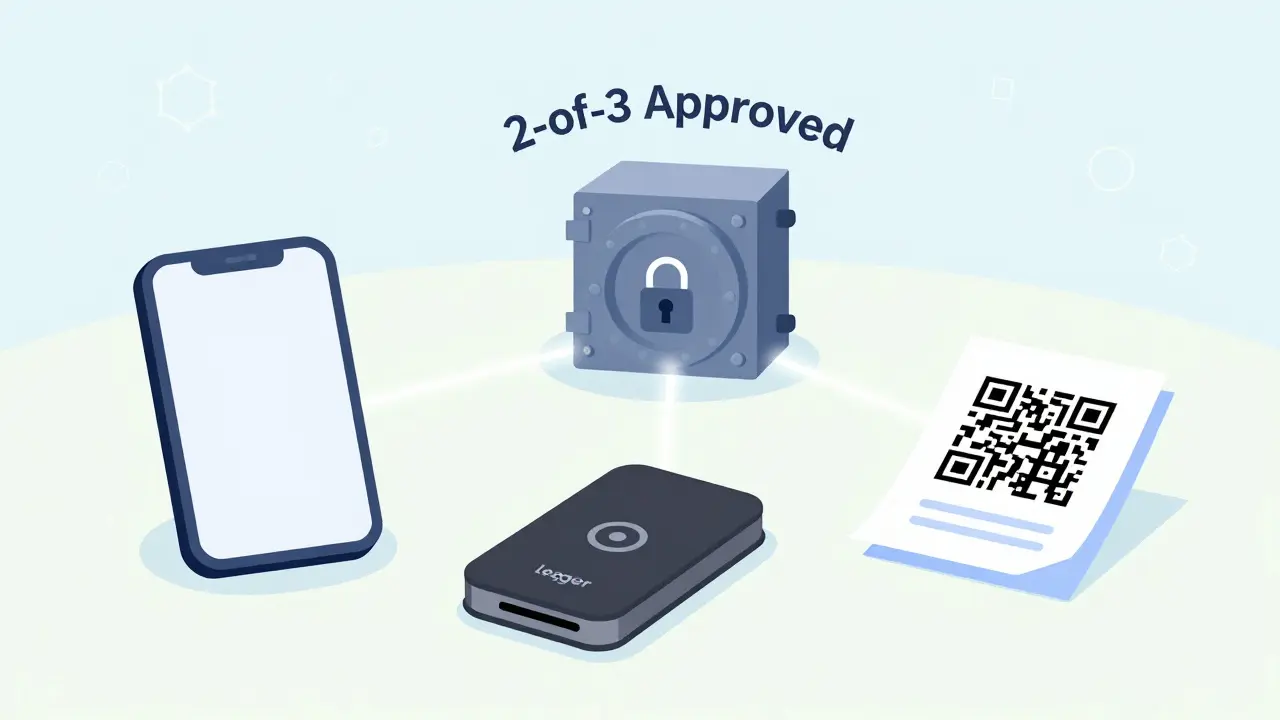
MultiSig wallets require multiple signatures to move crypto, making them far safer than single-key wallets. Learn how Safe Wallet, Blue Wallet, and others protect large holdings against theft, loss, and internal fraud.
Safe Wallet: How to Protect Your Crypto and Avoid Scams
When you hold crypto, your Safe Wallet, a non-custodial digital tool that gives you full control over your private keys. Also known as self-custody wallet, it’s the only real way to own your crypto—because if you don’t control the keys, you don’t own the coins. Most people lose crypto not because the market crashed, but because they used a bad wallet or fell for a phishing scam. A safe wallet isn’t just about encryption—it’s about how you store your seed phrase, the 12-24 word backup that can restore your entire wallet, where you keep it, and who you trust with it.
There are dozens of wallets out there, but only a few are actually safe. Hardware wallets like Ledger and Trezor are top choices because they keep your keys offline, away from hackers. Software wallets like MetaMask or Phantom work fine too—if you never type your seed phrase into a website or share it with "support." The biggest danger isn’t a glitch in the code—it’s you. Over 80% of crypto losses come from human error: clicking a fake link, downloading a malicious app, or writing your seed phrase on a sticky note. Even big platforms like Bitskrix, a fake exchange with no website or reviews, pretend to be safe to steal your keys. Real safe wallets don’t ask for your seed phrase. Ever.
What makes a wallet truly safe? It’s not the brand name or the flashy UI. It’s whether you’re the only one who can access your funds. A safe wallet lets you sign transactions without exposing your keys. It doesn’t store your data on a server. It doesn’t promise "free tokens" or "guaranteed returns." And it doesn’t let anyone reset your password. If a wallet asks you to log in with email, or sends you a code to your phone—it’s not safe. The posts below show you exactly how scammers trick people into giving up control, what real security looks like, and which wallets are still trustworthy in 2025. You’ll see how people lost crypto to fake airdrops, how phishing scams evolved with AI, and why even "secure" exchanges like BitbabyExchange turned out to be traps. This isn’t theory. It’s what happened to real users—and how to make sure it doesn’t happen to you.