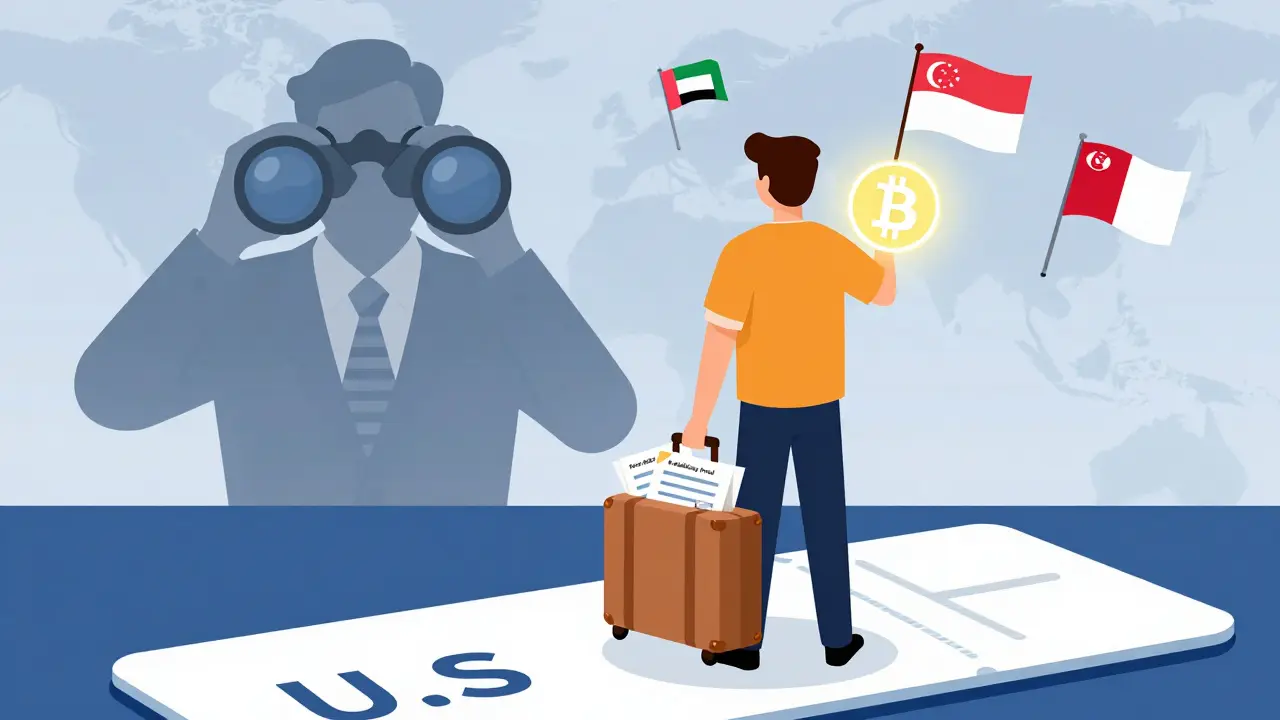
Tax residency changes for crypto can save money - but only if you do it right. In 2025, the U.S. and global tax systems are catching up. Learn which countries still offer real savings, the hidden costs, and why moving might not be worth it.
Tax Residency Change Crypto: What You Need to Know Before Moving Your Crypto Assets
When you change your tax residency, the country where you’re legally required to pay income tax based on where you live. Also known as tax domicile, it determines not just your income tax rate, but how your crypto holdings are treated by the government. This isn’t just paperwork. If you move from the U.S. to Portugal, or from Germany to Dubai, your crypto gains, staking rewards, and even airdrops could suddenly be taxed at 0%, 28%, or 30%—and you might still owe taxes to your old country.
Many people think moving abroad means they can escape crypto taxes. That’s a myth. Countries like the U.S. and Australia tax citizens based on nationality, not location. Others, like the UK and Canada, look at your ties—where your family lives, where you bank, where you spend most of your time. If you keep your crypto on a U.S. exchange while living in Thailand, the IRS may still come after you. And if you moved to a no-tax country like Singapore or the UAE but didn’t formally sever ties with your home country, you could get hit with back taxes and penalties.
Your crypto tax jurisdiction, the country whose tax laws apply to your crypto activity based on your legal residency. changes the rules entirely. In Portugal, holding crypto for over a year means zero capital gains. In India, every trade triggers a 30% tax plus 1% TDS. In Germany, you pay nothing if you hold for more than a year—but only if you’re a resident. And if you’re a digital nomad without clear residency? You’re in a gray zone where multiple countries might claim you owe taxes.
Then there’s the crypto tax compliance, the process of reporting your crypto transactions accurately to tax authorities based on your residency status. It’s not just about filing forms. It’s about proving where you lived, when you bought, when you sold, and how much you earned. Tax agencies now share data across borders. If you traded on Binance while living in Spain and later moved to Canada, both countries can see your transaction history. Missing a disclosure isn’t just risky—it’s often criminal.
Changing your tax residency for crypto isn’t about finding a loophole. It’s about making a legal, documented shift in your life. You need to move your bank accounts, update your address with exchanges, stop using your old country’s ID, and sometimes even sell assets before you leave. People who try to game the system end up paying more in penalties than they saved in taxes.
Below, you’ll find real cases and clear guides on how crypto tax rules work across different countries, what happens when you move, and how to avoid getting caught in the crossfire. Whether you’re thinking of relocating, already moved, or just trying to understand your obligations—this collection cuts through the noise and shows you exactly what matters in 2025.