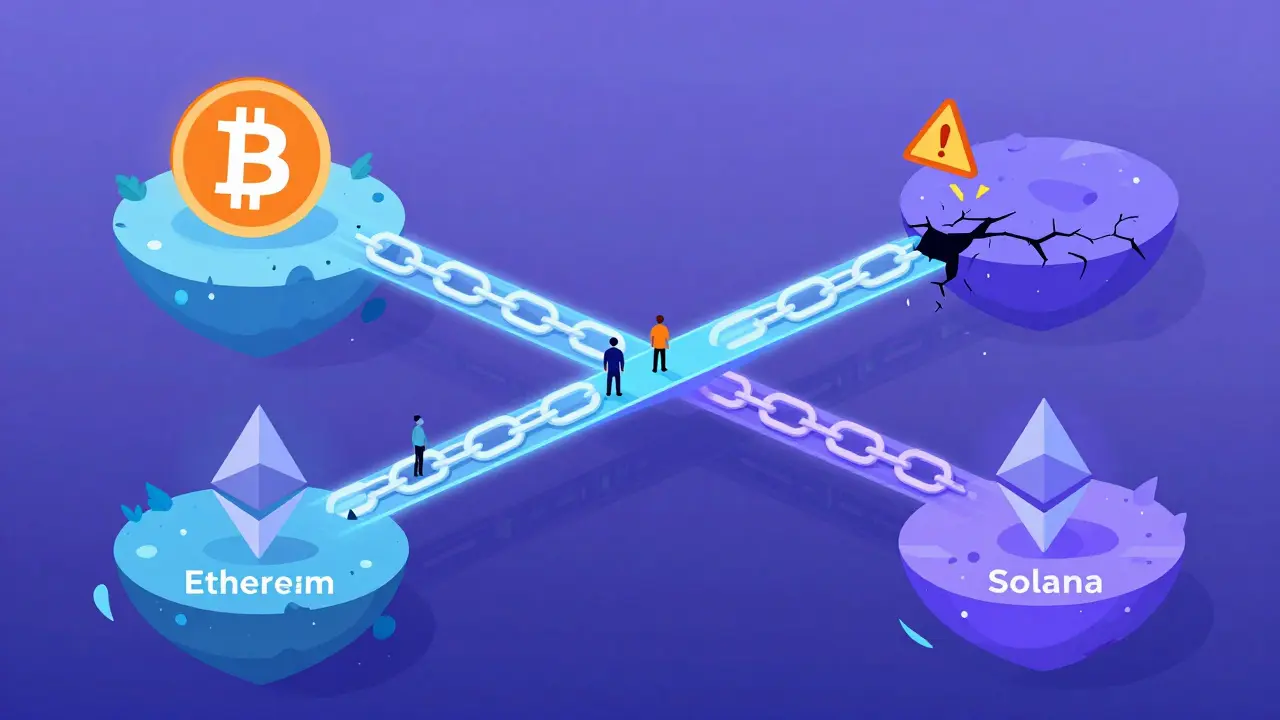
Cross-chain bridges connect isolated blockchains, letting you move assets like Bitcoin to Ethereum for DeFi. But with $2.1 billion stolen in 2022, security is critical. Learn how they work, which ones are safest, and what’s next.
Wrapped Bitcoin: What It Is, How It Works, and Why It Matters in Crypto
When you hear Wrapped Bitcoin, a tokenized version of Bitcoin that runs on Ethereum. Also known as wBTC, it lets you use Bitcoin inside Ethereum apps without selling your BTC. Think of it like a voucher: you lock your real Bitcoin with a trusted custodian, and in return, you get an ERC-20 token that acts just like Bitcoin but works on DeFi platforms like Uniswap, Aave, or Compound. This isn’t magic—it’s a bridge between two of crypto’s biggest networks.
Wrapped Bitcoin matters because Bitcoin itself can’t natively interact with smart contracts. But with wBTC, you can lend your Bitcoin for interest, use it as collateral for loans, or trade it in decentralized exchanges—all while keeping your original BTC safe on the Bitcoin blockchain. That’s why major players like Coinbase, BitGo, and Kraken are part of the wBTC custodian network. It’s not just a workaround; it’s the most trusted way to bring Bitcoin’s liquidity into DeFi. But it’s not risk-free. You’re trusting third parties to hold your Bitcoin, and if something goes wrong with the custodians or the smart contract, your wBTC could be at risk. That’s why most users only wrap what they plan to use in DeFi—not their entire holdings.
Related concepts like tokenized Bitcoin, any digital asset representing Bitcoin on another blockchain, show up in other projects too—like tBTC or HBTC—but wBTC remains the dominant one because of its transparency and auditability. Meanwhile, DeFi Bitcoin, the use of Bitcoin in decentralized finance protocols via wrapped versions has exploded in volume, with billions locked in lending and liquidity pools. You’ll find real-world examples of this in posts about liquidity pools, DeFi risks, and how traders use stablecoins like USDT alongside wrapped assets to move capital across chains.
What you’ll find below aren’t just articles about wBTC—they’re deep dives into how tokenized assets behave in real markets, the security trade-offs, and why some projects fail while others stick around. From scams hiding behind fake airdrops to exchanges that claim to support wrapped tokens but don’t actually let you withdraw them, the collection shows you what to watch for. Whether you’re using wBTC to earn yield or just trying to understand why it exists, these posts cut through the noise and show you what’s real, what’s risky, and what’s just hype.